BinderDocs: AI Document Operating System
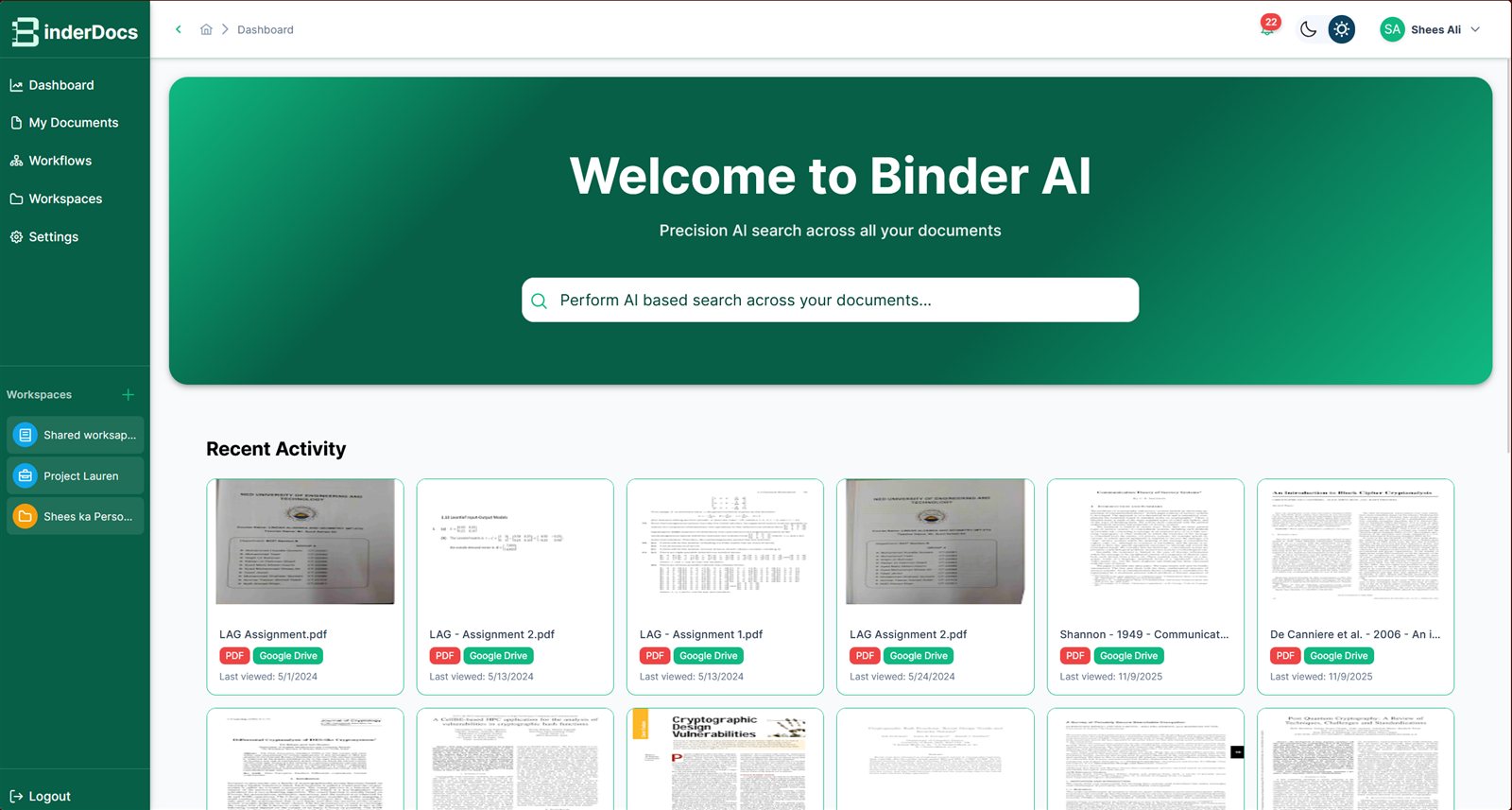
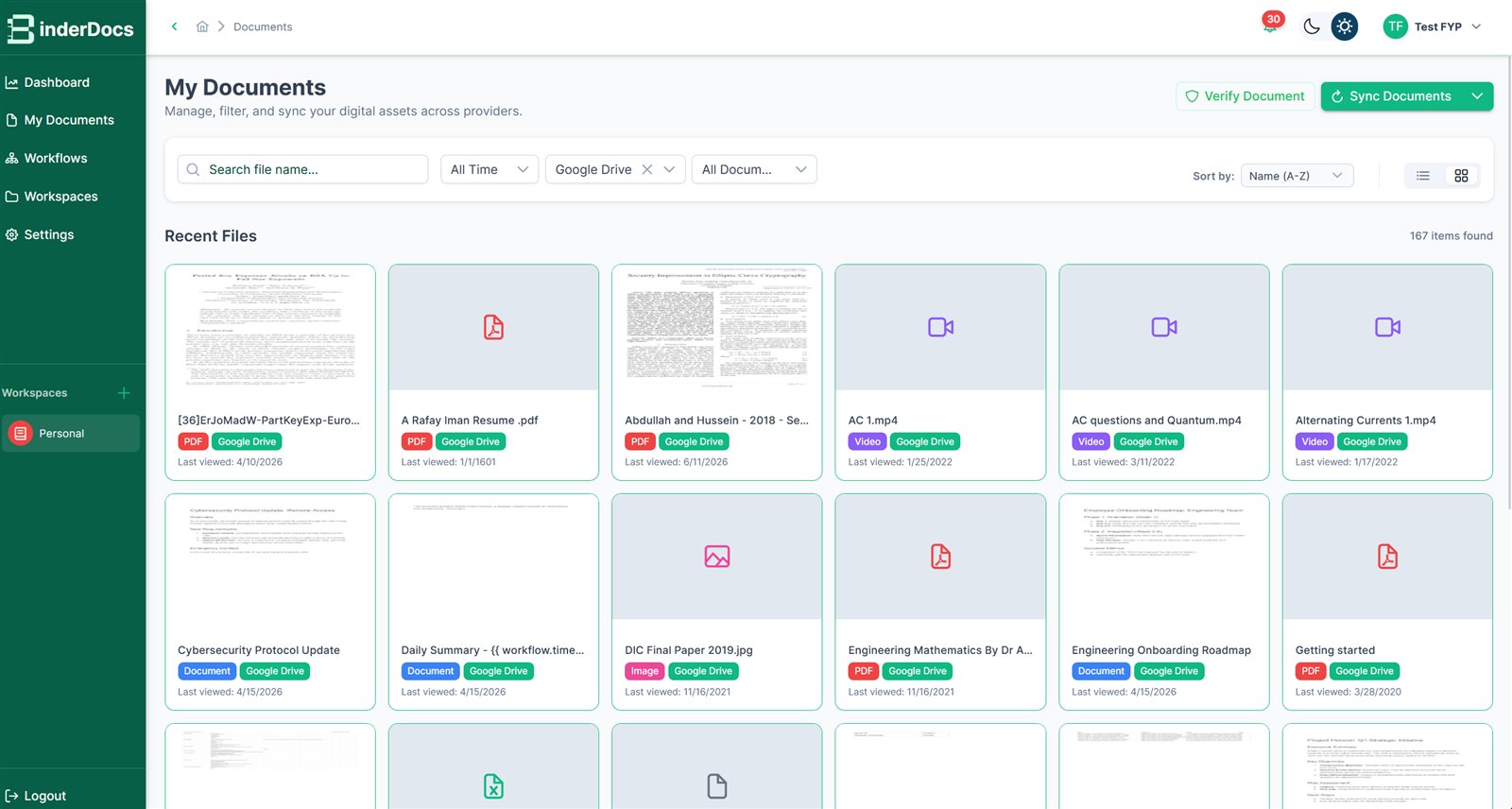
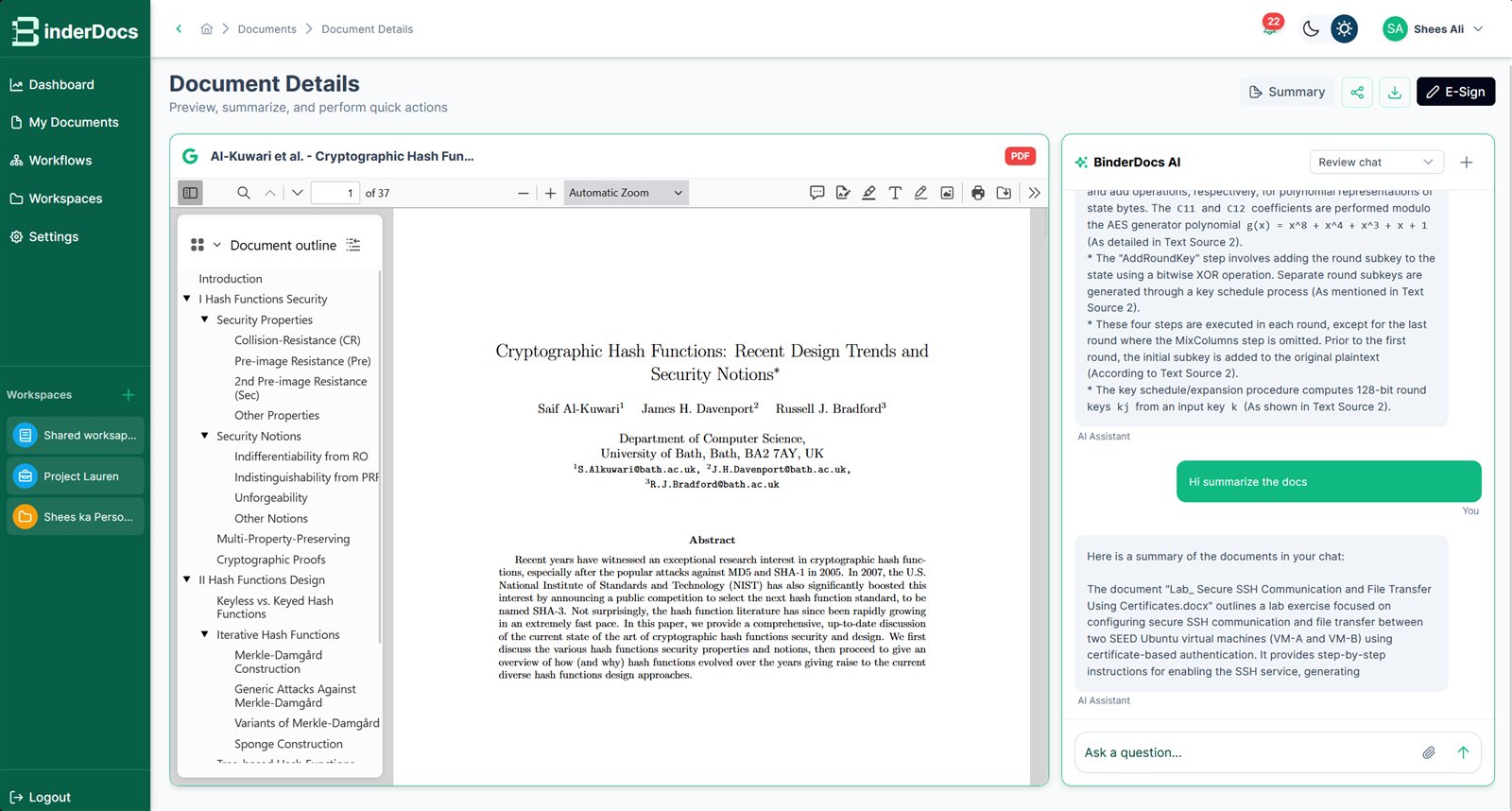
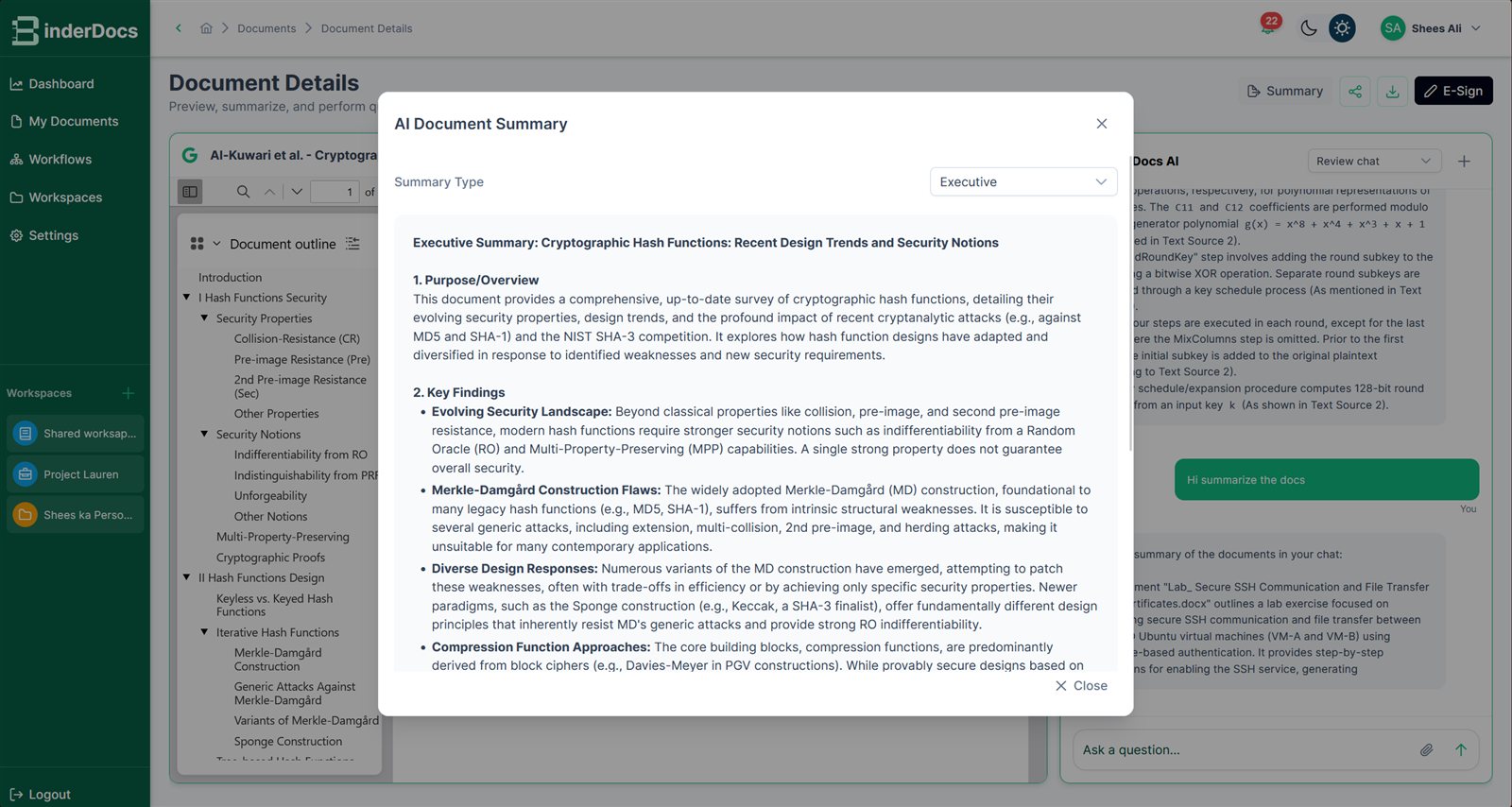

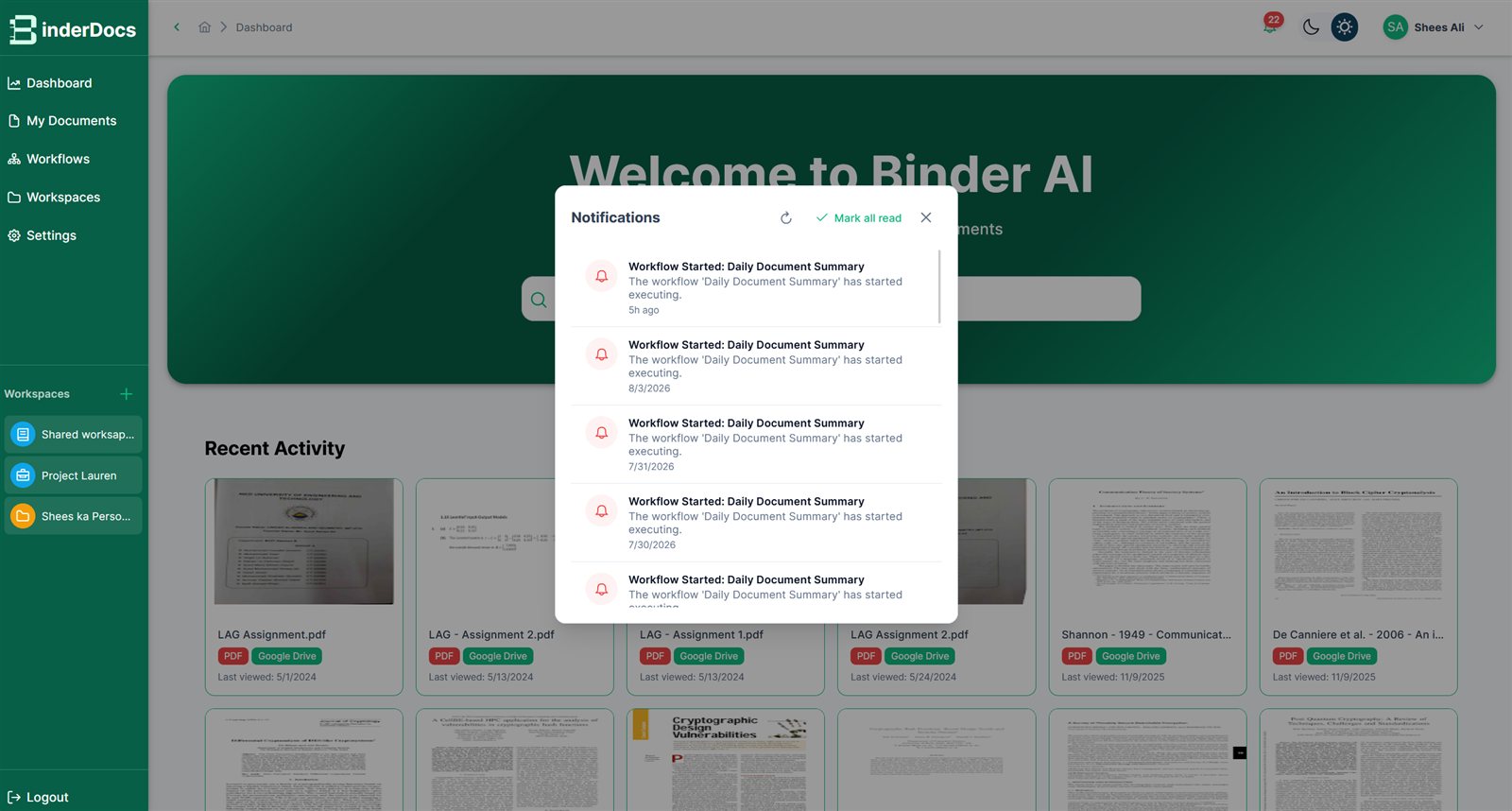
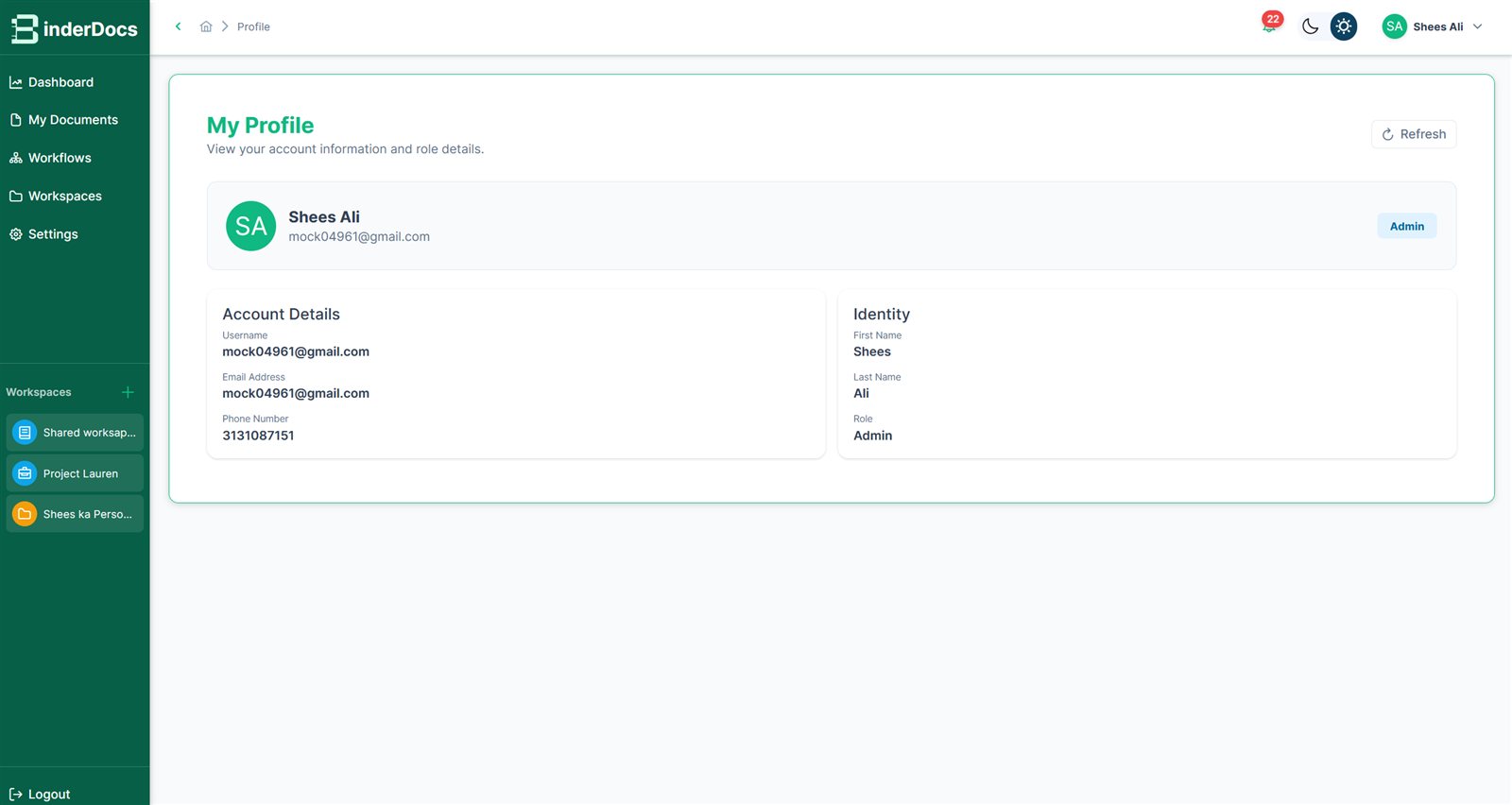
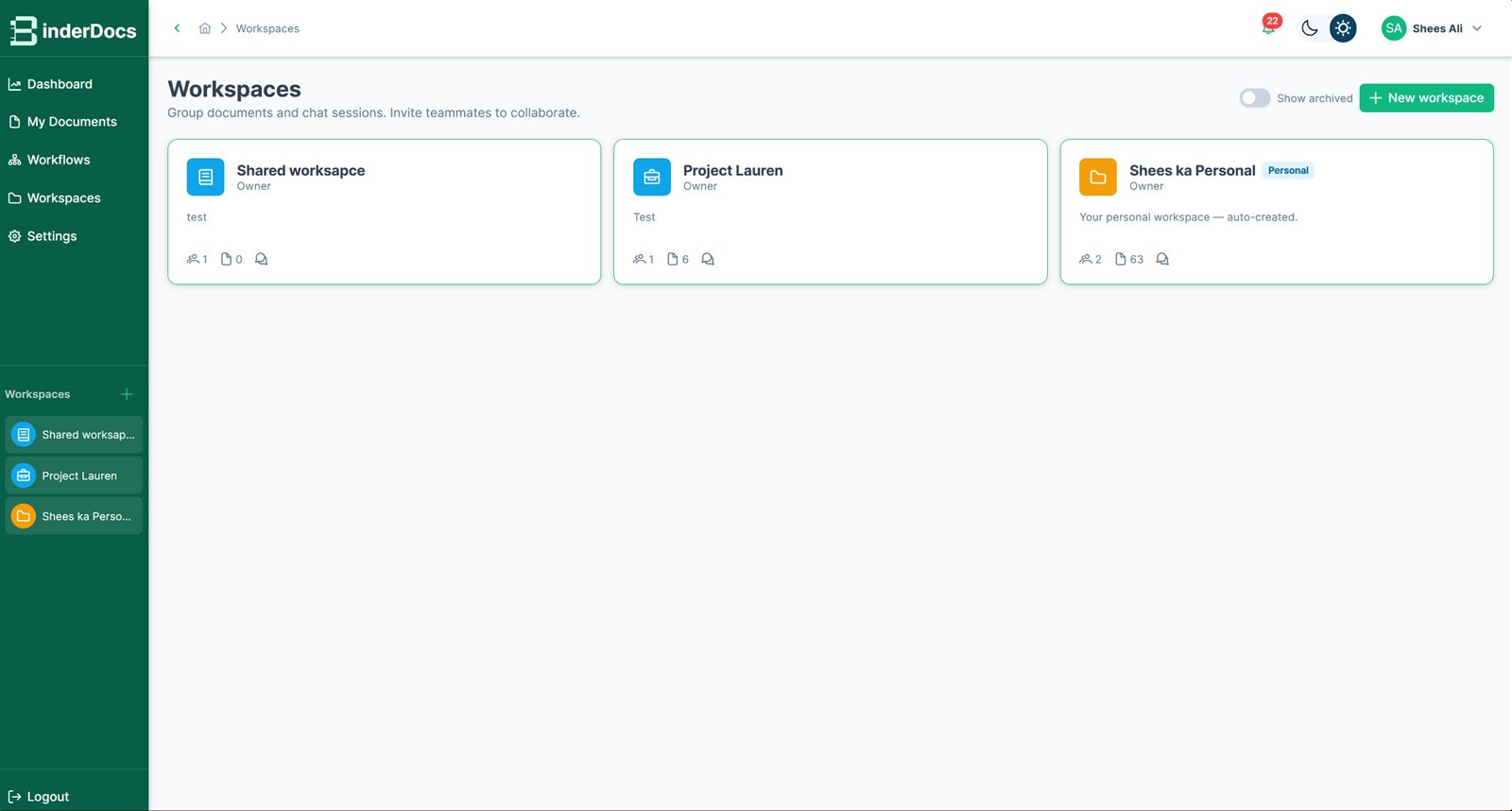
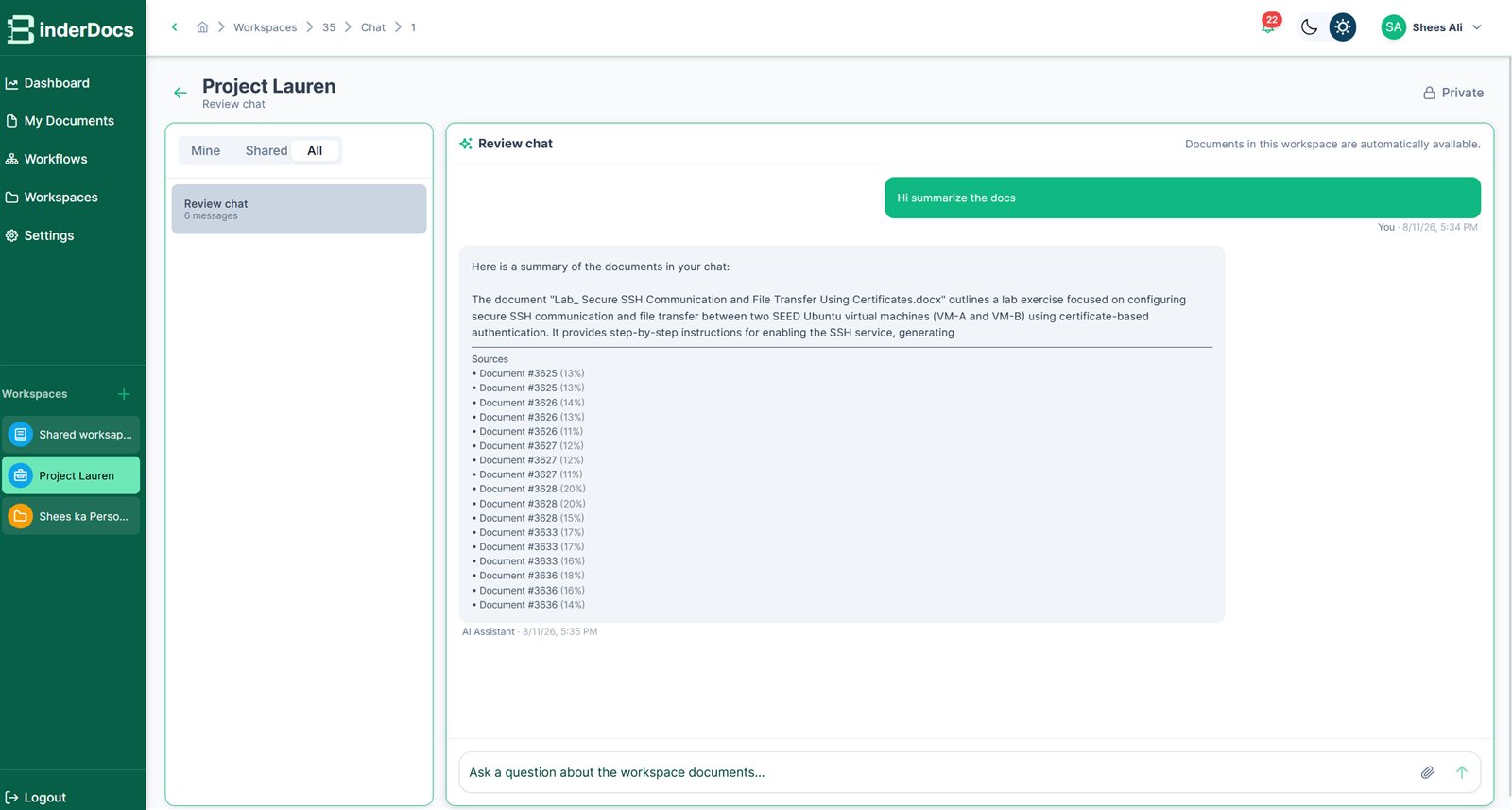
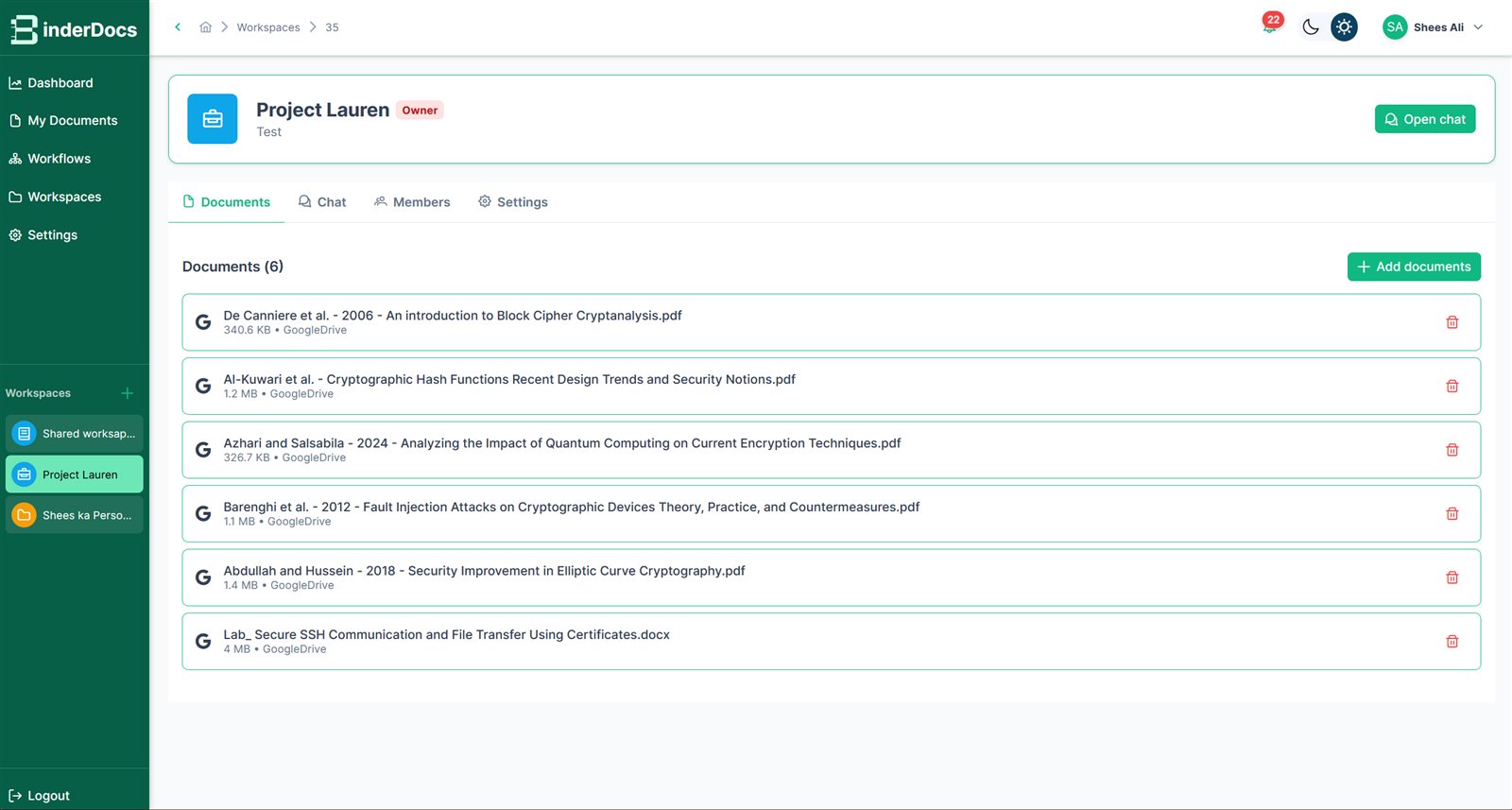
Most businesses manage documents across a fragmented set of tools: cloud storage in one place, approvals over email, signatures handled manually, no automation tying it together. BinderDocs was conceived as a capstone project to prove a unified answer was possible: one platform combining cloud storage integration, AI-powered document intelligence, e-signatures, and workflow automation.
Backend (ASP.NET Core 9, Clean Architecture) — the core platform API, PostgreSQL via EF Core, JWT authentication. AI microservice (Python/FastAPI), built and maintained personally — documents chunked and embedded into Pinecone for RAG, a direct extension of the engine built and evaluated independently in DocumentBot, extended with semantic search, document summarization, and image/vision processing, plus Ollama for multi-model flexibility and Azure Cognitive Services for OCR.
Cloud storage integration — OAuth 2.0 connections to Google Drive and Microsoft OneDrive, with Azure Storage Queue and Functions handling scheduled background sync. E-signature workflows built on SHA-256 cryptographic hashing for document integrity, rather than a simple image-overlay signature.
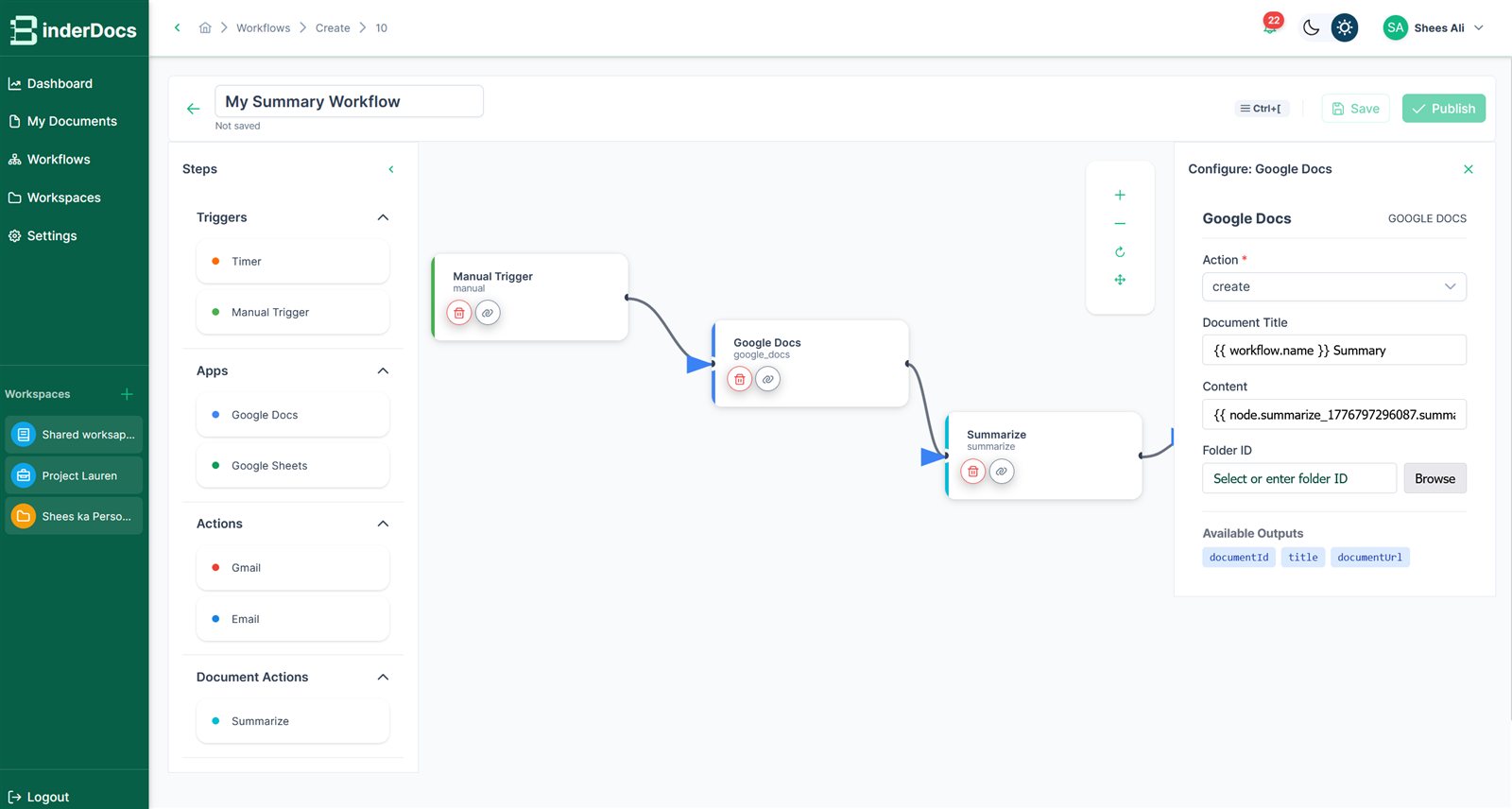
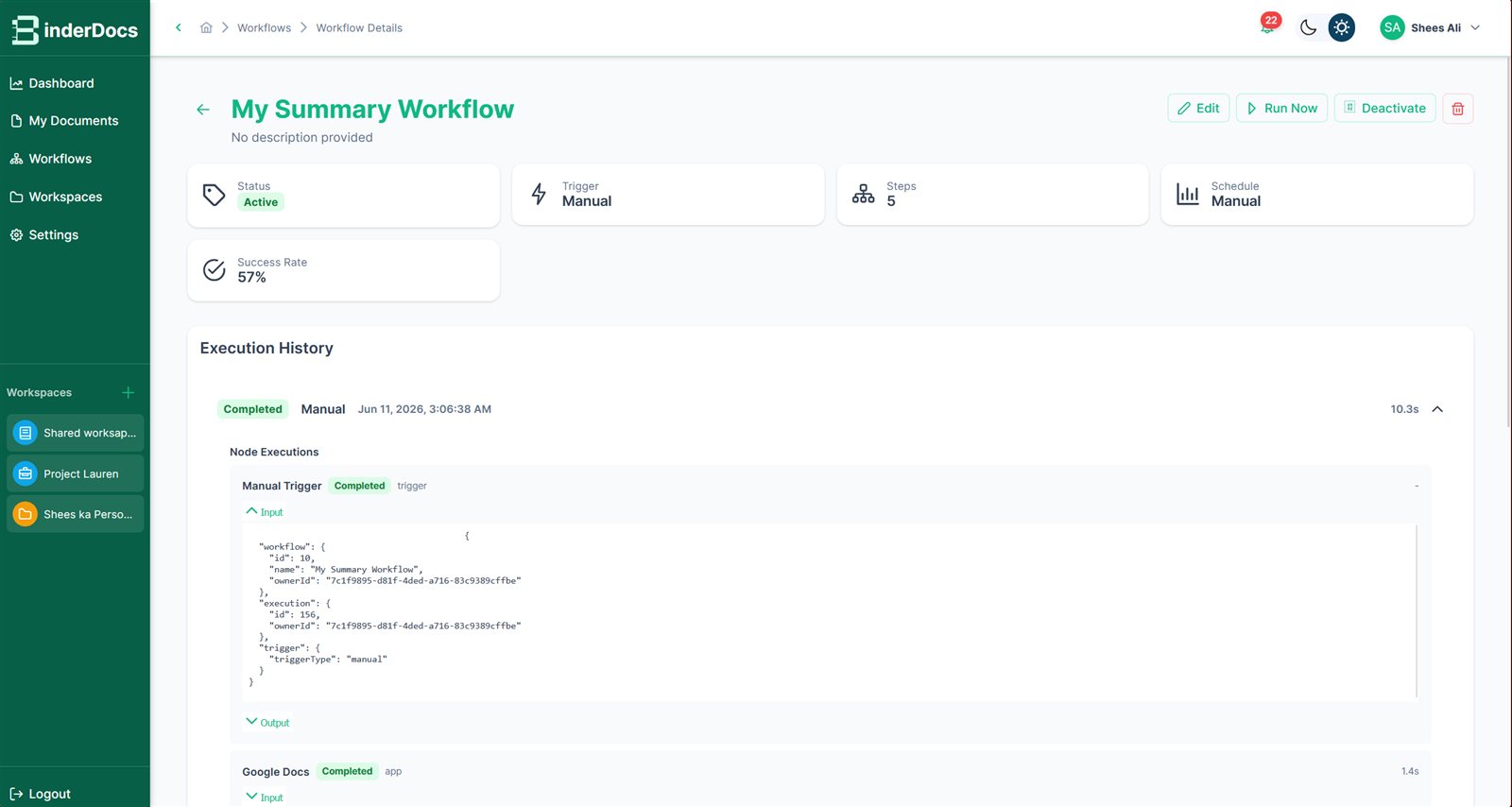
Workflow automation — a visual, no-code workflow designer for document-routing and approval processes, plus dynamic onboarding questionnaires. A responsive Angular/PrimeNG frontend with light/dark mode.
Where the build stood at close: most functional requirements were successfully implemented and tested — authentication, cloud storage integration, AI-powered document processing, e-signature workflows, workflow management, and dynamic questionnaires. Two pieces were explicitly scoped to a future release rather than claimed as done: Hangfire-based batch data synchronization, and WebSocket-based real-time updates.
The RAG engine's evaluated accuracy numbers (85%→92% retrieval relevance after reranking, 88% answer accuracy) are inherited from DocumentBot — see the linked case study — rather than separately re-measured here. This is an academic capstone project, not client or production work.
The most reusable decision here wasn't any single feature — it was not rebuilding the RAG/document-intelligence engine from scratch. Because the retrieval and reranking pipeline had already been built and evaluated independently in DocumentBot, BinderDocs could extend it instead of re-solving a problem that was already solved.