Tamayouz Excellence Portal
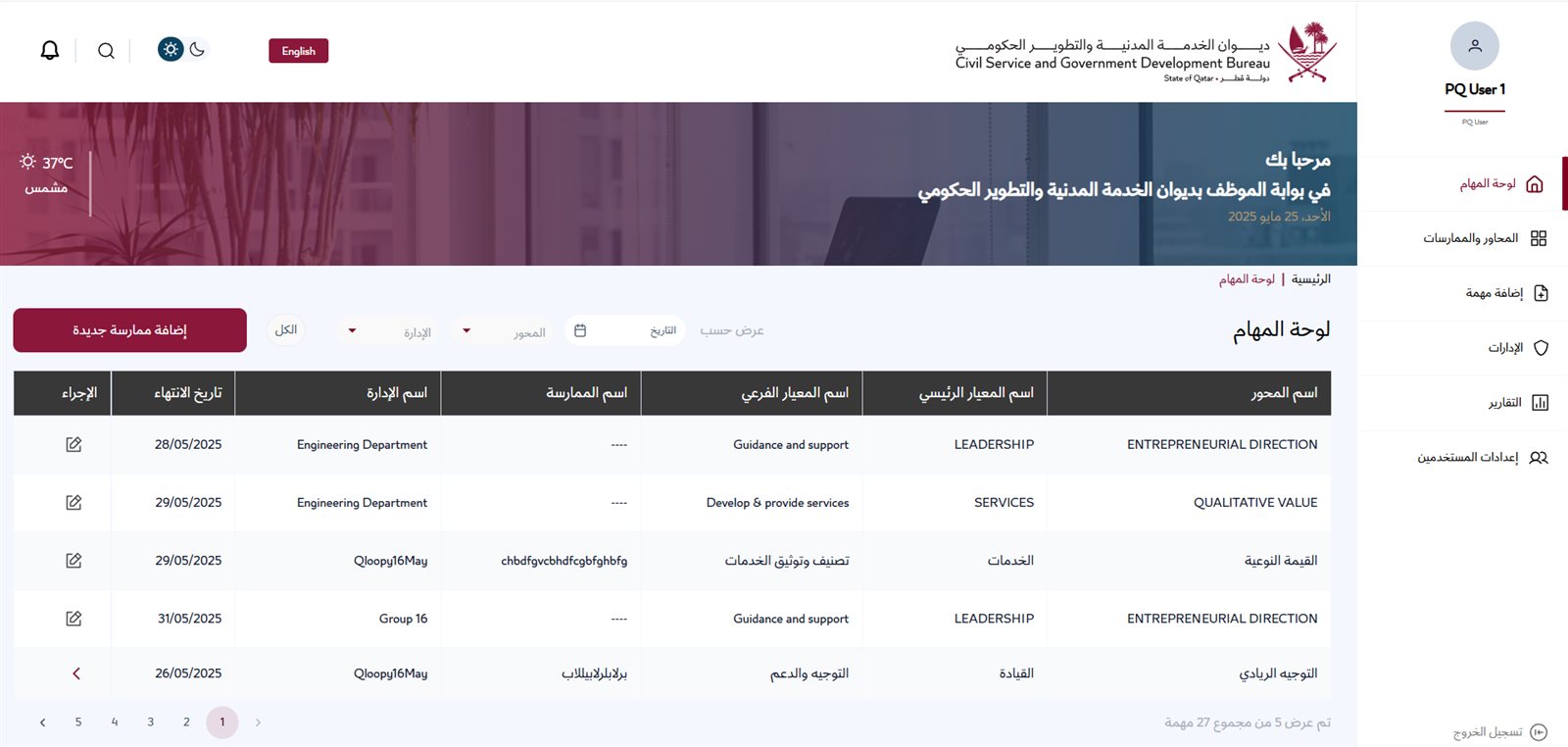
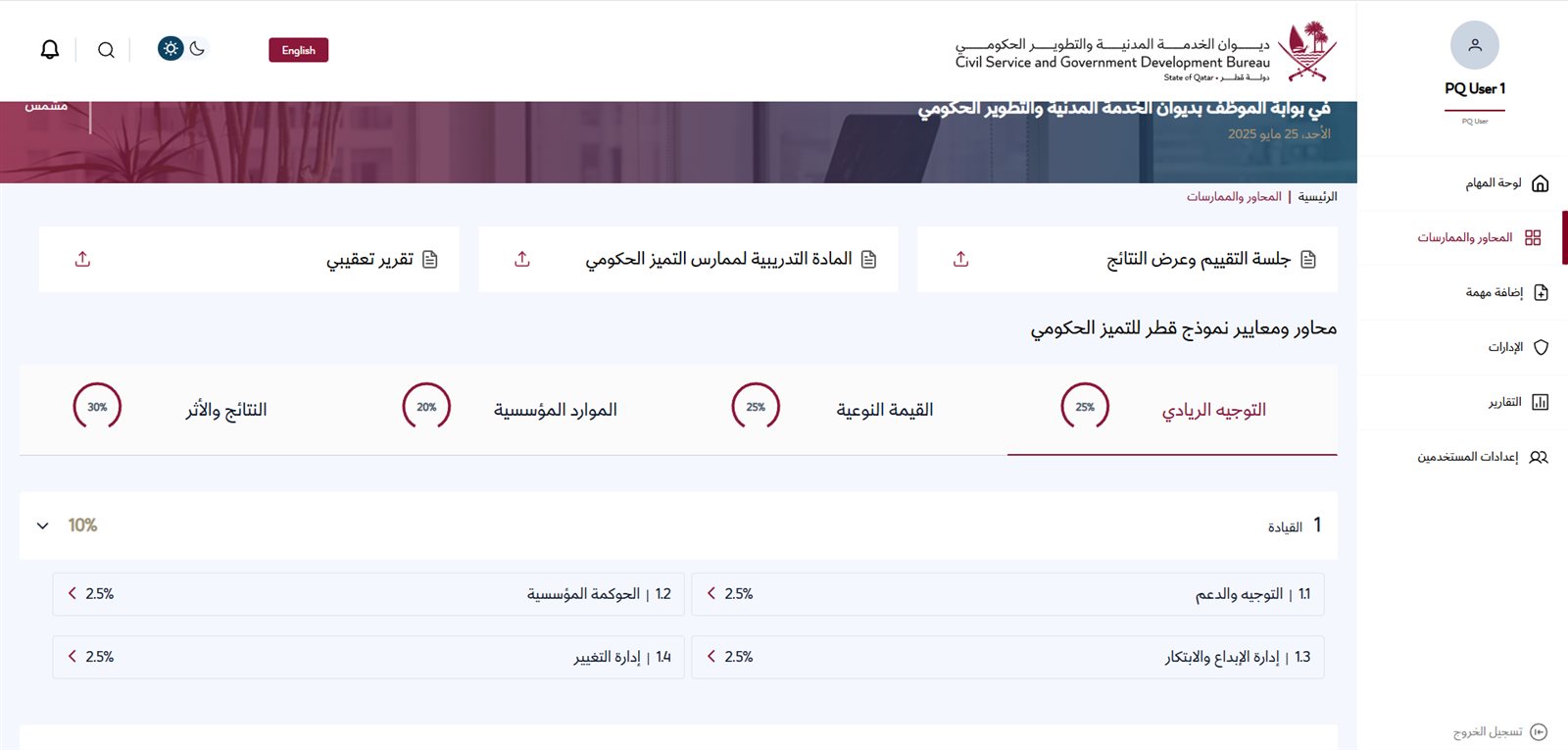
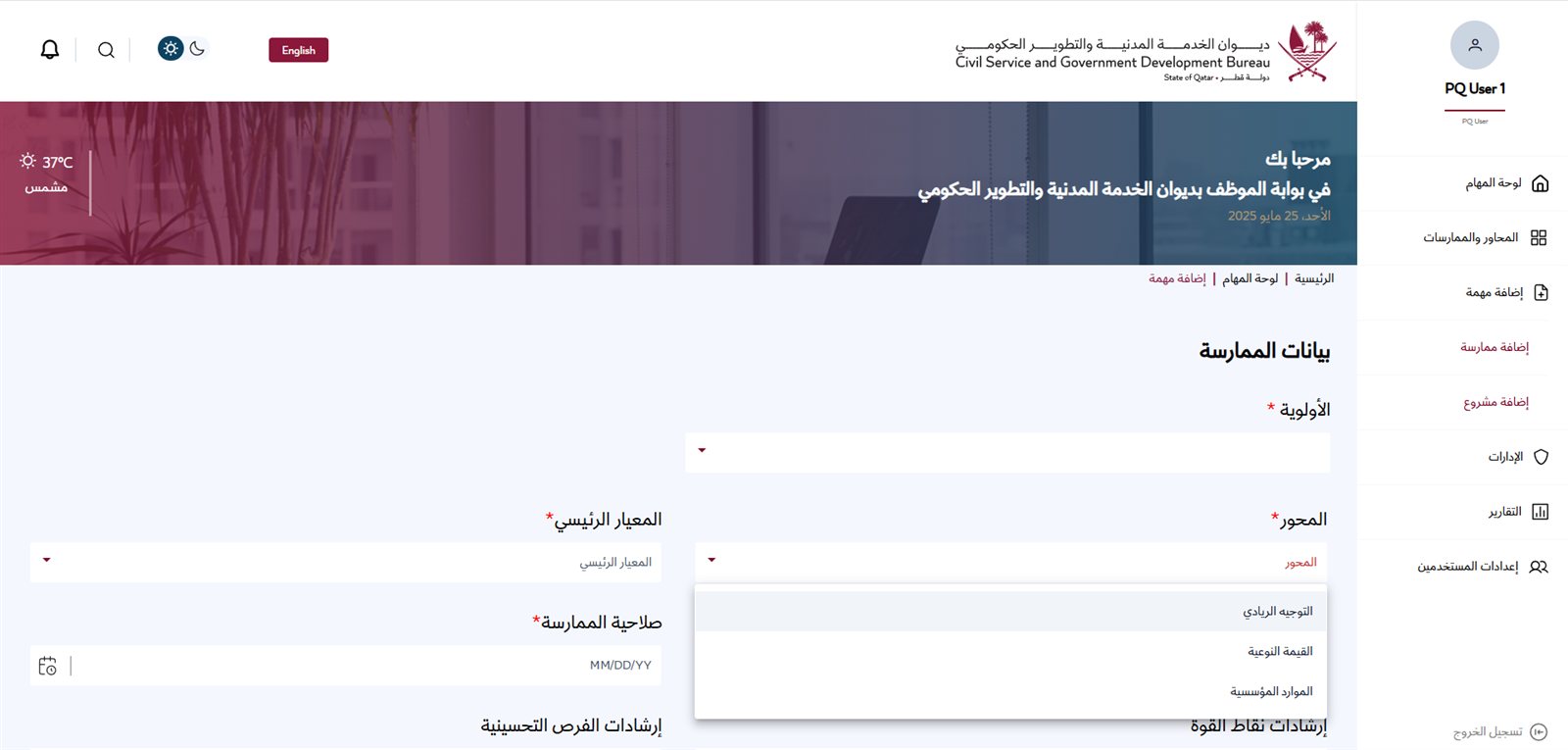
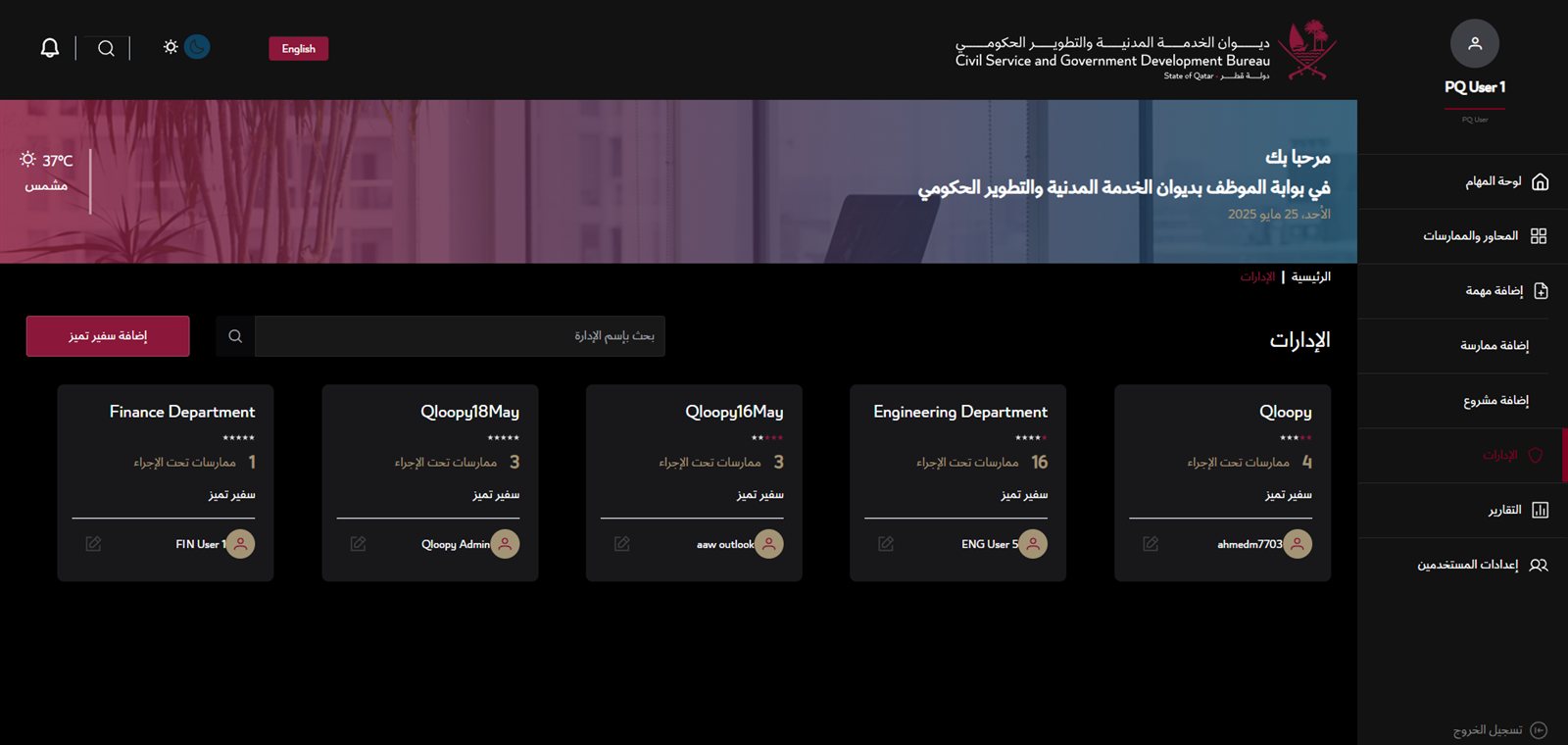
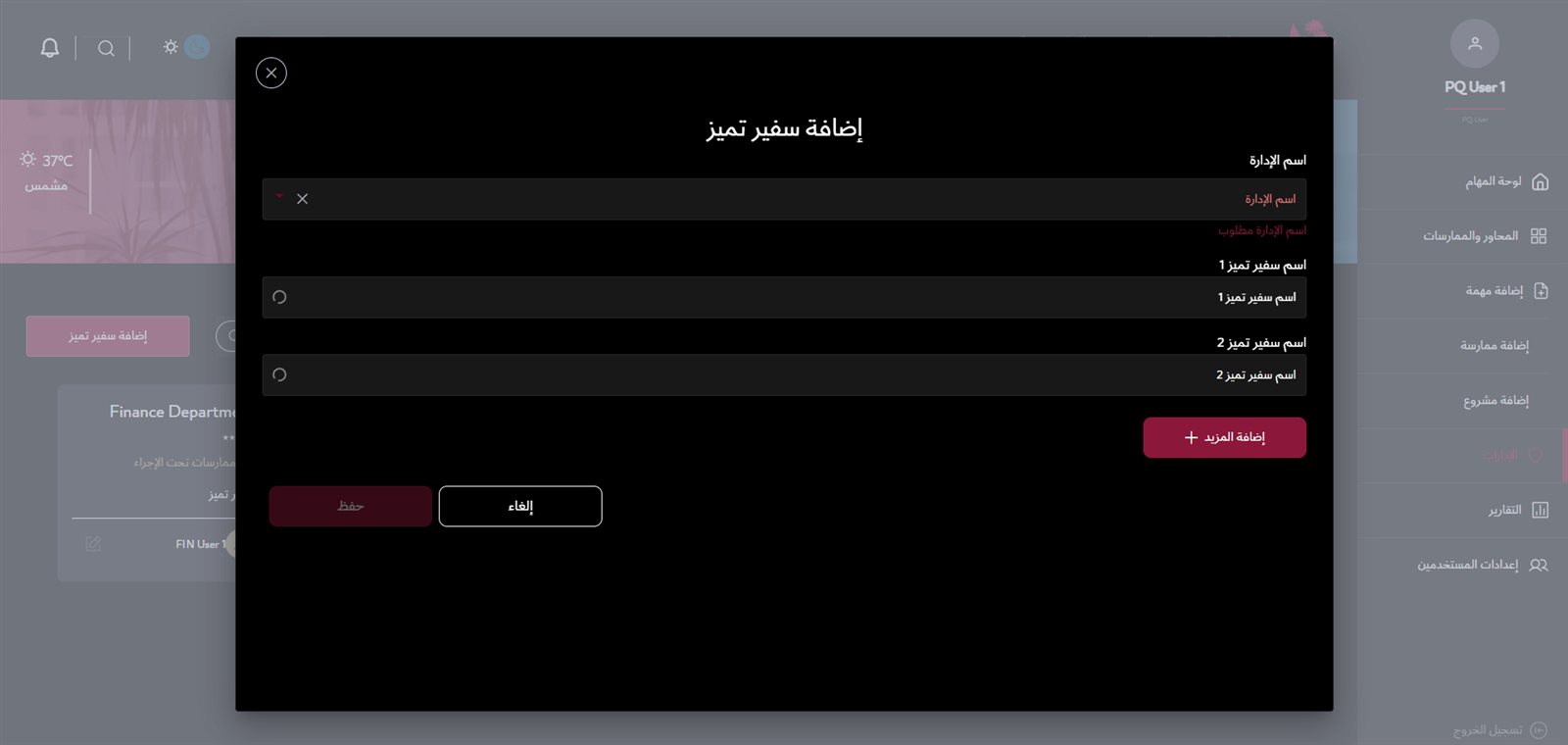
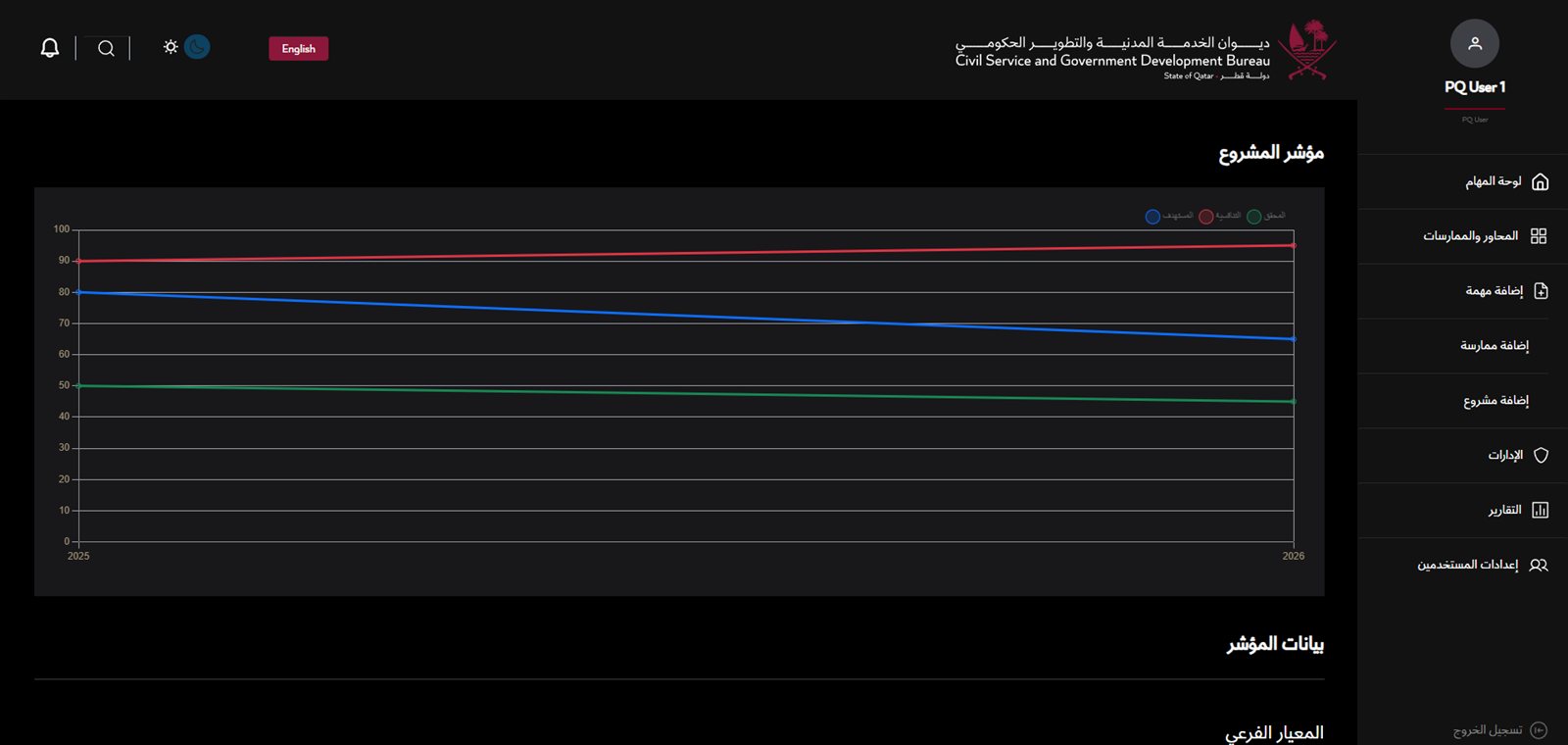
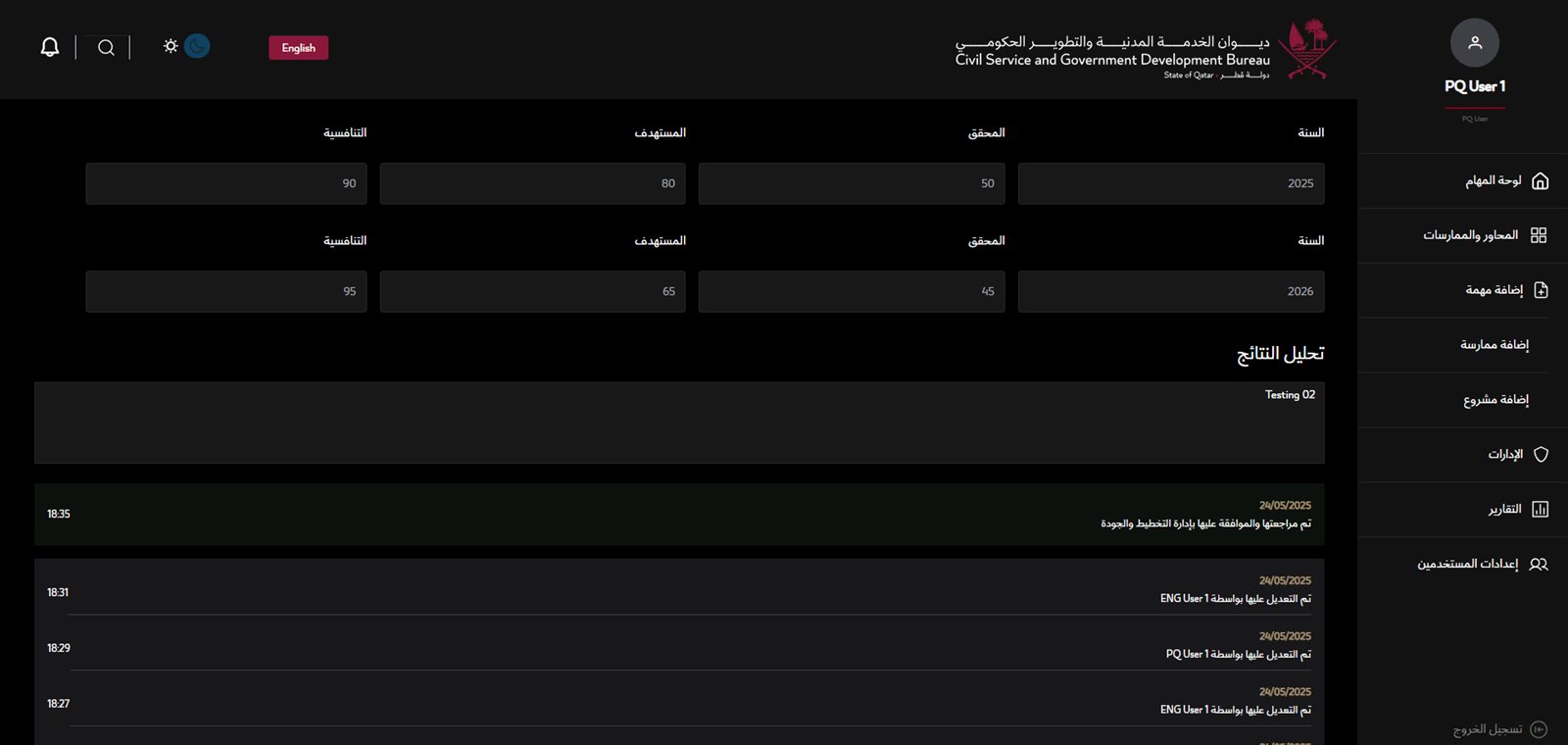
The Government of Qatar needed an internal portal, accessed as an extension of their own existing enterprise portal, letting multiple departments submit, review, approve, and report on operational "practices" and "projects" against a defined set of excellence standards — with three distinct user tiers, all authenticated through the client's existing Azure AD/Entra identity provider. A detailed spec existed before build started, but it turned out to be necessary, not sufficient — basic implementation questions were still being resolved in the first 48 hours.
Authentication and role-based access — single sign-on against the client's Azure AD/Entra tenant, three role tiers controlling UI visibility and API-level authorization, with users and departments queried live against Microsoft Graph API.
Practice/project workflow — department-facing submission against excellence standards, routed to owning/supporting departments, moving through a full status lifecycle (submitted → under review → approved) with real-time UI feedback. Notifications via Azure Communication Services; secure document handling via Azure Blob Storage; an embedded Power BI reporting layer; full Arabic/English localization via ngx-translate.
Engineering challenges solved: a multi-tenant role architecture built around roles resolved live from the client's Azure AD tenant; an environment-vs-code bug (a notification feature failing in one environment, root-caused via live application logs rather than re-reading the code, revealing a misconfigured connection value); several mid-project framework/pattern migration requests evaluated individually against the current build state; and distributed delivery across two repositories with 38+ frontend and 100+ backend pull requests.
No dollar-recovered or percentage-improved figure exists in the source material — this was a subcontracted team delivery, not a milestone-billed reconciliation engagement.
A written spec, prepared before work starts, is necessary but not sufficient on its own. What actually held this engagement together technically was the discipline of diagnosing before patching — twice tracing real failures to environment/configuration state rather than assuming the newest code change was at fault.